Cheese
Posted Date: 01/06/26 (04:23 PM)
Thank you to Ford-Iroquois Ag in the Classroom and Discover Dairy for an engaging science lesson on the chemical changes that take place when making cheese. The sixth through eighth grade science students loved seeing chemistry in action and learning how science connects to real-world food production.
Ingredients
- 1 quart (about 1 liter) whole milk (avoid ultra-pasteurized milk, as it won't form good curds)
- 2-3 tablespoons white vinegar (5% acidity) or lemon juice
- A pinch of salt (optional, to taste)
Instructions
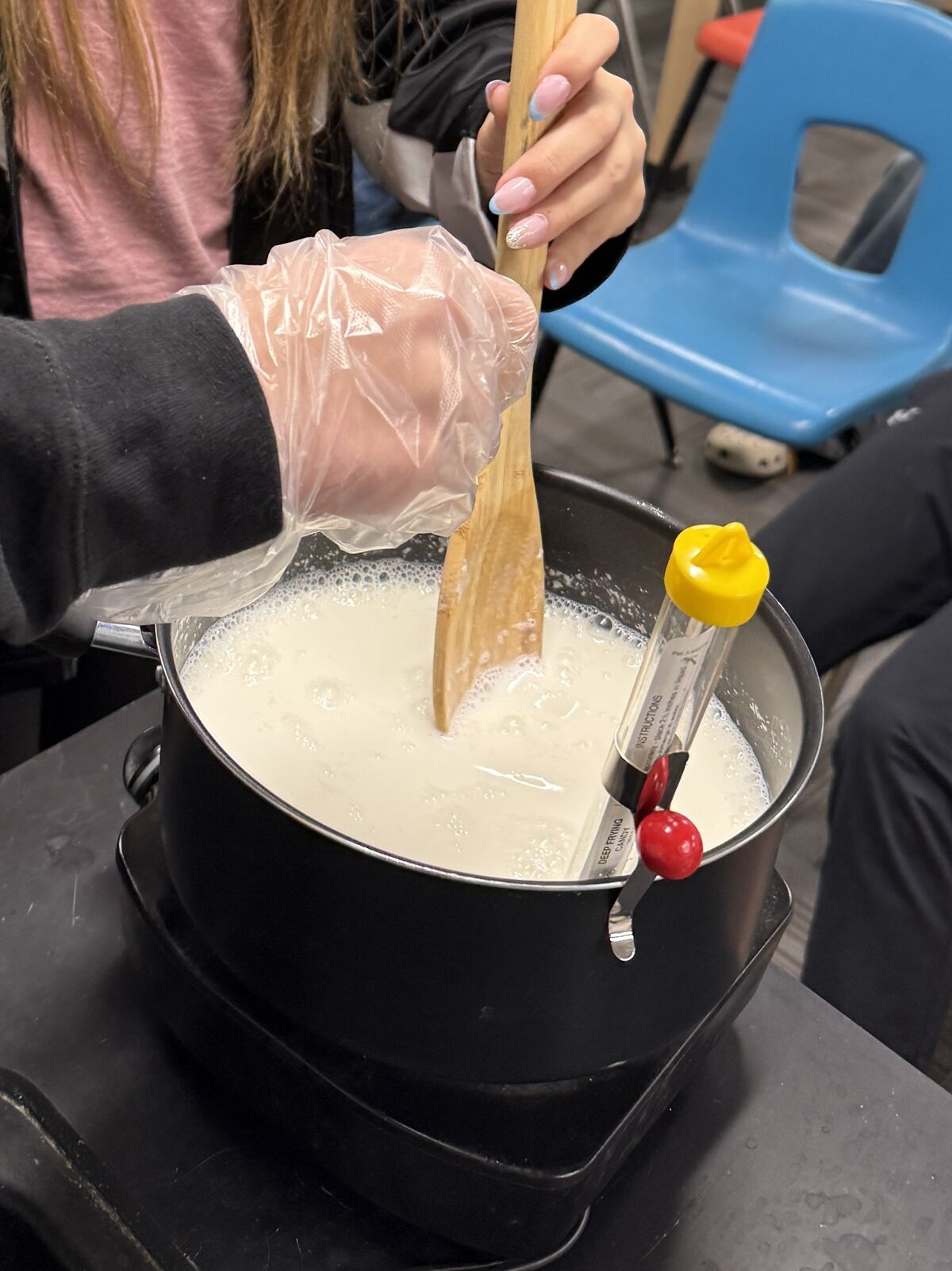
- Heat the Milk: Pour the milk into the pot. Heat it slowly over medium-low heat, stirring frequently to prevent scorching, until it reaches about 100°F, just before a full boil.
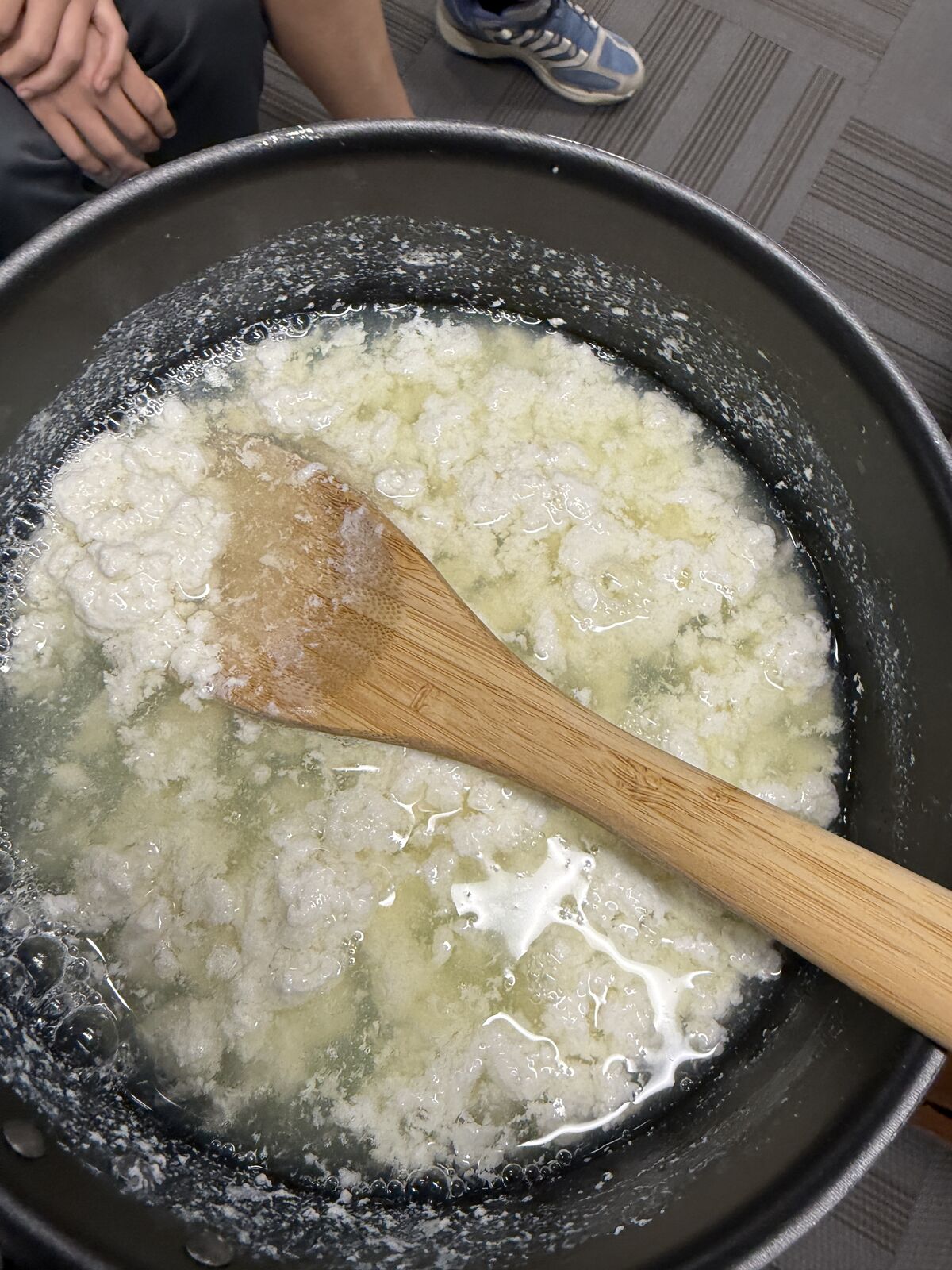
- Add Acid: Remove the pot from the heat. Slowly add the vinegar, one tablespoon at a time, gently stirring after each addition. You should see the milk begin to curdle almost immediately, separating into white curds (solids) and yellowish, translucent whey (liquid). In class we added 4-5 Tbsp. of vinegar.
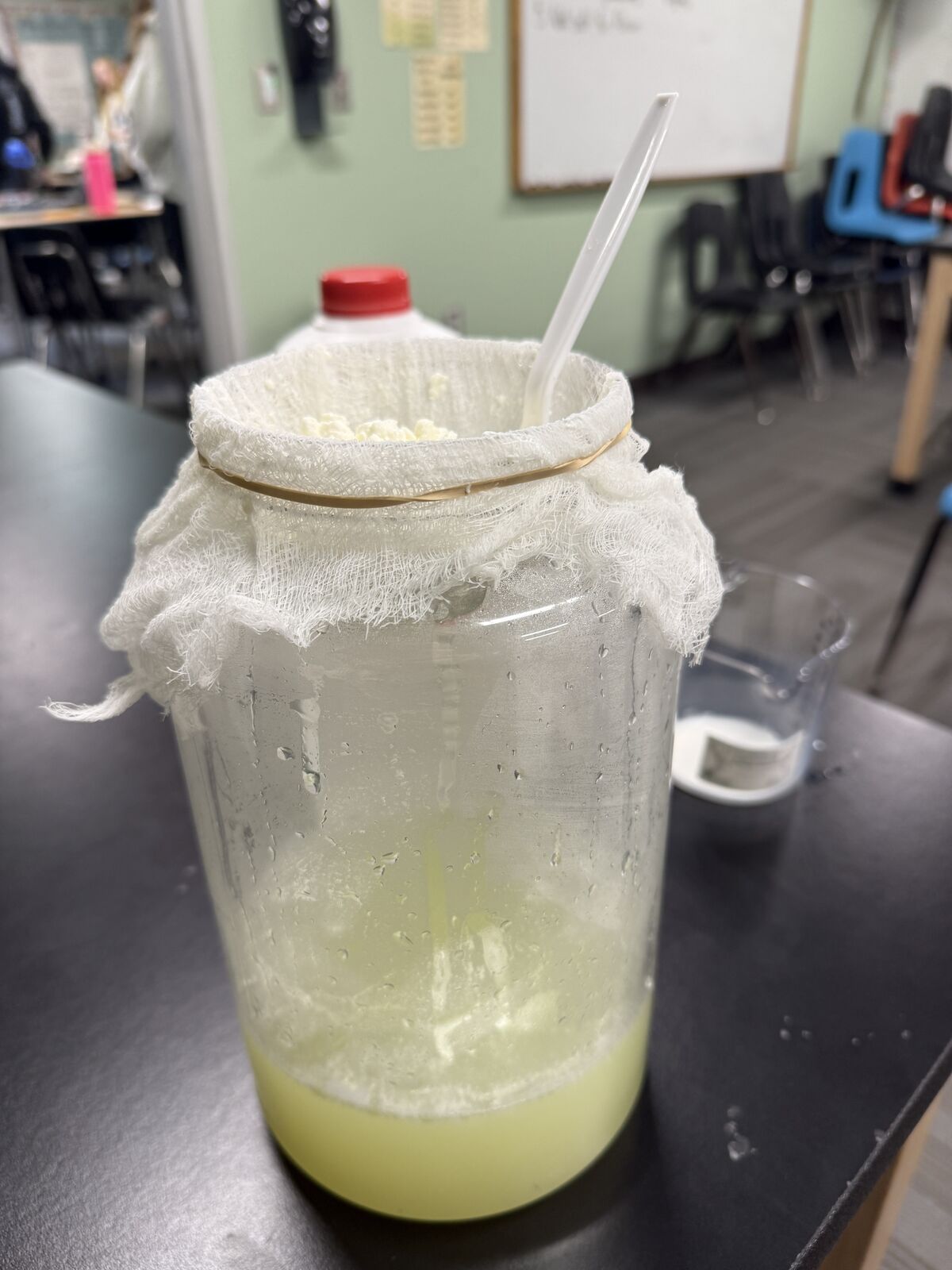
- Strain the Curds: Line your colander with several layers of cheesecloth and place it over a large bowl to catch the whey. Slowly pour the curds and whey mixture into the colander.
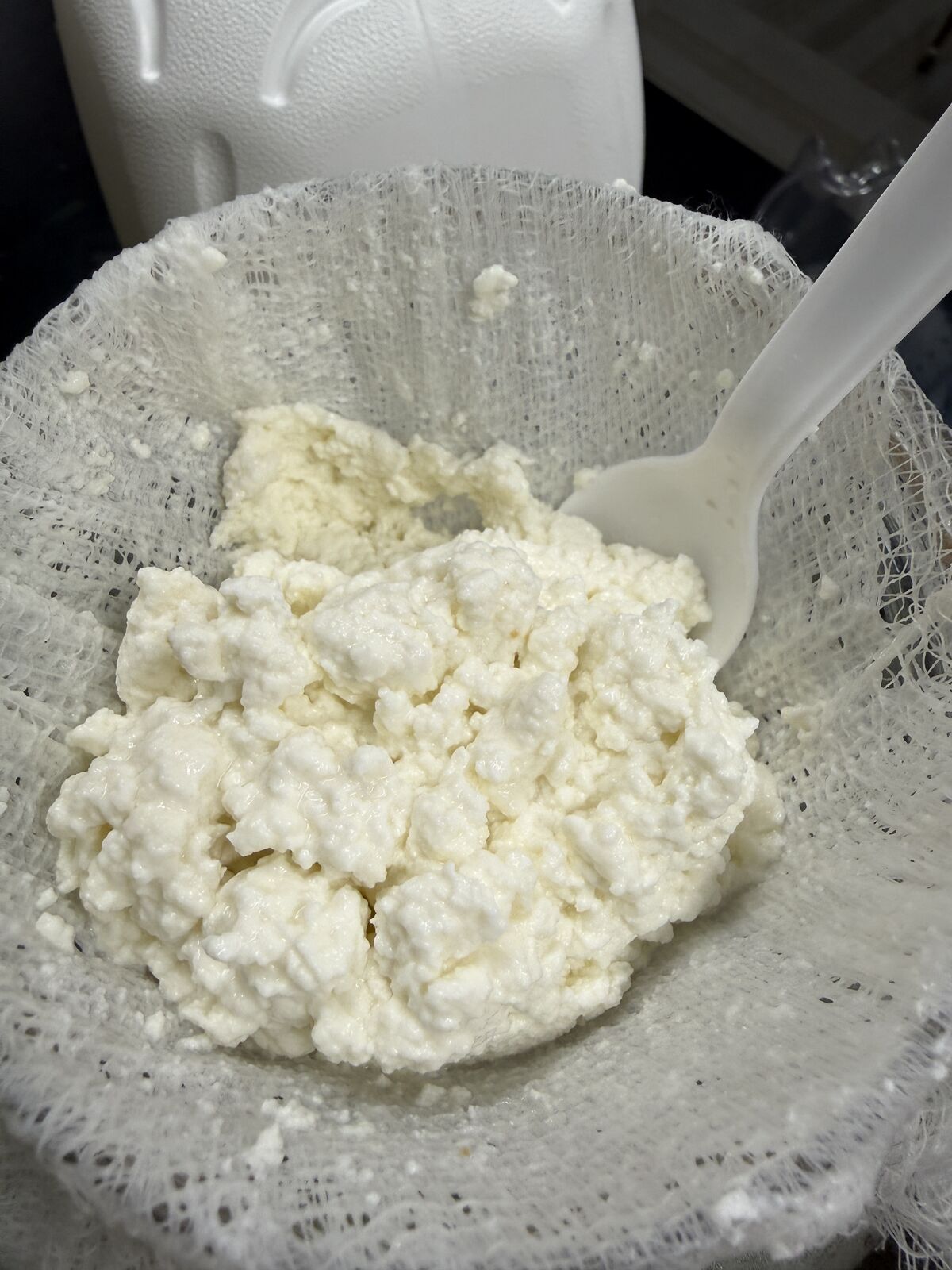
- Drain the Cheese: Gather the edges of the cheesecloth and gently squeeze out the excess whey. The more liquid you squeeze out, the firmer the final cheese will be. We rinsed the cheese with distilled water to get rid of the vinegar.
- Season (Optional): Transfer the curds to a bowl and mix in a pinch of salt. You can also add herbs or spices at this stage.
- Form and Chill: Shape the curds into a ball or disc and wrap them in plastic wrap. Refrigerate for at least two hours to firm up.
Notes
- Storage: The fresh cheese should be stored in an airtight container in the refrigerator and consumed within 3–4 days.